Print

Student Handout 4 - Worksheet: Medical and Pharmaceutical Information

Medical and Pharmaceutical Information Online

Learning Objectives
Upon completion of this section you should be able to:
  • Understand the terms: reliability and validity
  • Understand how the right to freedom of speech affects information online
  • Relate how online resources are not always well balanced and fair
  • Identify the pros and cons of utilizing the Internet for medical research and support

Terms to Know
• Pharmaceutical
• Reliable
• Valid
• Freedom of speech



Unit - Substance Abuse Issues in an Online Culture (High School Unit)

This unit integrates e-Safety with Health Science as well as drug prevention and awareness programs (e.g. Ribbon Week). Students discover how peer pressure, advertisements and online environments influence youth to engage in substance abuse. The student workbook provides information on the underground network and risks associated with online access to prescription and OTC drugs.

Lesson - Medical & Pharmaceutical Information Online

Students develop media and information literacy skills. They conduct a short research project on medical issues and pharmaceuticals, and they evaluate online information sources. Students come to understand that credible, accurate, reliable sources of information are crucial to support valid scientific research.

Student Handout 4 - Worksheet: Medical and Pharmaceutical Information

Students develop media and information literacy skills. They conduct a short research project on medical issues and pharmaceuticals, and they evaluate online information sources. Students come to understand that credible, accurate, reliable sources of information are crucial to support valid scientific research.

Print

Student Handout 4 - Worksheet: Medical and Pharmaceutical Information Online


Learning Objectives
Upon completion of this section you should be able to:
• Understand the terms: reliability and validity
• Understand how the right to freedom of speech affects information online
• Relate how online resources are not always well balanced and fair
• Identify the pros and cons of utilizing the Internet for medical research and support

Terms to Know
• Pharmaceutical
• Reliable
• Valid
•Freedom of speech


Unit - Substance Abuse Issues in an Online Culture

This unit integrates e-Safety with Health Science as well as drug prevention and awareness programs (e.g. Ribbon Week). Students discover how peer pressure, advertisements and online environments influence youth to engage in substance abuse. The student workbook provides information on the underground network and risks associated with online access to prescription and OTC drugs.

Lesson - Medical & Pharmaceutical Information Online

Students develop media and information literacy skills. They conduct a short research project on medical issues and pharmaceuticals, and they evaluate online information sources. Students come to understand that credible, accurate, reliable sources of information are crucial to support valid scientific research.

Student Handout 4 - Worksheet: Medical and Pharmaceutical Information Online

Students develop media and information literacy skills. They conduct a short research project on medical issues and pharmaceuticals, and they evaluate online information sources. Students come to understand that credible, accurate, reliable sources of information are crucial to support valid scientific research.

Print

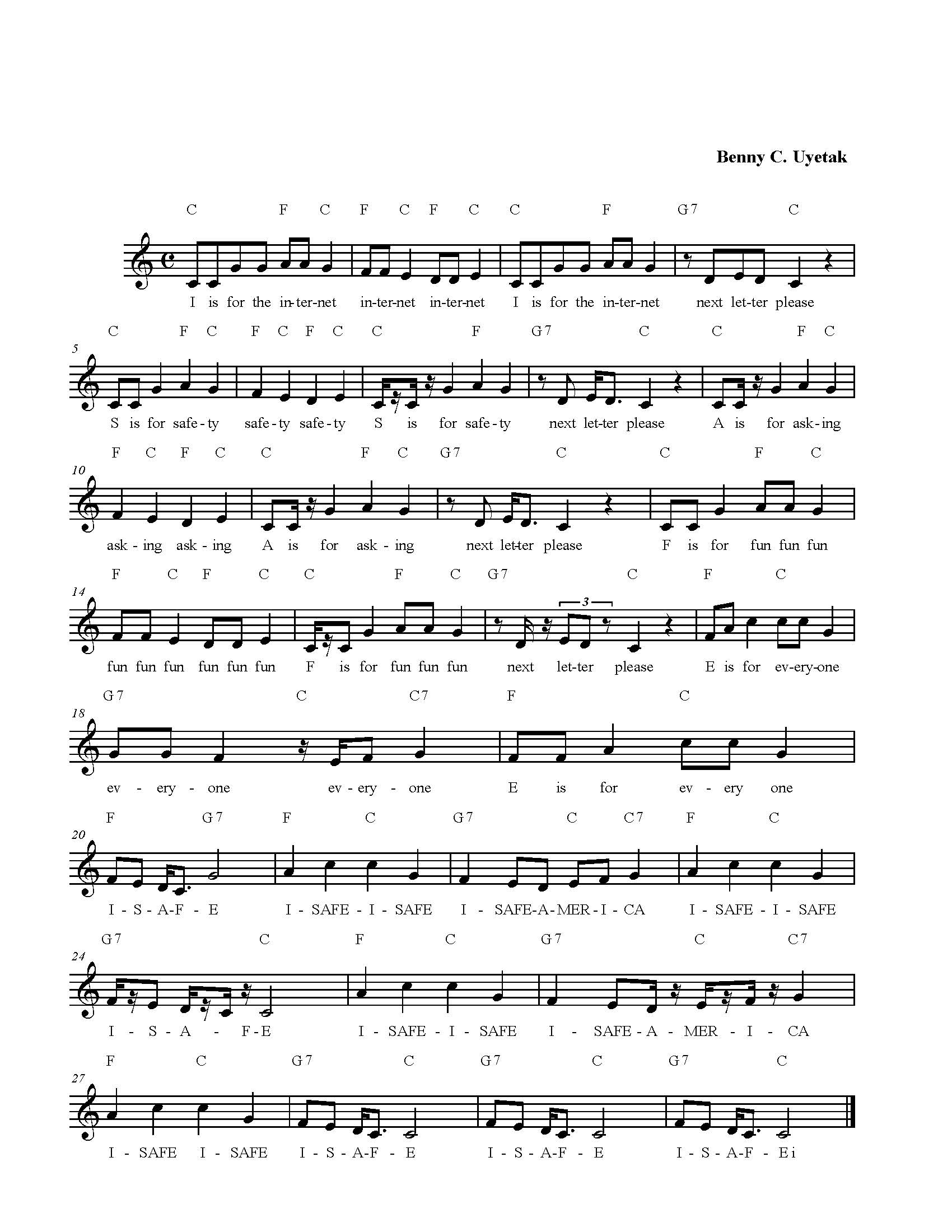
Teacher Reference Page 1 : i-S-A-F-E Sheet Music

Description


Lesson Plan - Music and Movement: i-S-A-F-E

Lesson Plan - Music and Movement: i-S-A-F-E

As part of i-SAFE’s Music and Movement series of lessons, students sing along with the song, “i-S-A-F-E” and gain an understanding of a key Internet safety principle: Ask an adult for permission and guidance before going online. They participate in a collaborative class discussion, acquire and use vocabulary terms, and practice print concepts.

Multimedia Resource - Song: i-S-A-F-E

Multimedia Resource - Song: i-S-A-F-E

As part of i-SAFE’s Music and Movement series of lessons, students sing along with the song, “i-S-A-F-E” and gain an understanding of a key Internet safety principle: Ask an adult for permission and guidance before going online. They participate in a collaborative class discussion, acquire and use vocabulary terms, and practice print concepts.

Teacher Reference Page 2: Answer Key - What i-S-A-F-E Means

Teacher Reference Page 2: Answer Key - What i-S-A-F-E Means

As part of i-SAFE’s Music and Movement series of lessons, students sing along with the song, “i-S-A-F-E” and gain an understanding of a key Internet safety principle: Ask an adult for permission and guidance before going online. They participate in a collaborative class discussion, acquire and use vocabulary terms, and practice print concepts.

Student Handout 1 - Reference Page:i-S-A-F-E Lyrics

Student Handout 1 - Reference Page:i-S-A-F-E Lyrics

As part of i-SAFE’s Music and Movement series of lessons, students sing along with the song, “i-S-A-F-E” and gain an understanding of a key Internet safety principle: Ask an adult for permission and guidance before going online. They participate in a collaborative class discussion, acquire and use vocabulary terms, and practice print concepts.

Student Handout 2 - Worksheet: What i-S-A-F-E Means

Student Handout 2 - Worksheet: What i-S-A-F-E Means

As part of i-SAFE’s Music and Movement series of lessons, students sing along with the song, “i-S-A-F-E” and gain an understanding of a key Internet safety principle: Ask an adult for permission and guidance before going online. They participate in a collaborative class discussion, acquire and use vocabulary terms, and practice print concepts.

Print

Student Handout 6 - Empowerment: Comic Strip Template & Storyboard

image.png


Lesson Plan - Coy and the Cyber Bully Sock Squad (Digital)

The Sock Puppet Nation comic “Coy and the Cyber Bully Sock Squad” illustrates cyber bullying tactics, impact, and reinforces the importance of standing up for others. Students study the interactions between characters to learn cyber bullying recognition and response. They write the resolution to the Sock Puppet Nation comic to demonstrate their learning. The lesson includes a teacher guide, printable activity pages, and interactive multimedia resources.

Teacher Reference Page - Quick Guide to Digital Programming: Delivery Methods & Instructions

Students closely follow the story and interactive lesson about text message etiquette featuring Dot & i. Students tje practice digital etiquette through follow-up activities and discussion. This lesson includes a lesson plan, printable activity pages, and interactive multimedia resources.

Teacher Reference Page - Transcript: Coy and the Cyber Bully Sock Squad

The Sock Puppet Nation comic “Coy and the Cyber Bully Sock Squad” illustrates cyber bullying tactics, impact, and reinforces the importance of standing up for others. Students study the interactions between characters to learn cyber bullying recognition and response. They write the resolution to the Sock Puppet Nation comic to demonstrate their learning. The lesson includes a teacher guide, printable activity pages, and interactive multimedia resources.

Student Handout 1 - Worksheet: Review the Story

The Sock Puppet Nation comic “Coy and the Cyber Bully Sock Squad” illustrates cyber bullying tactics, impact, and reinforces the importance of standing up for others. Students study the interactions between characters to learn cyber bullying recognition and response. They write the resolution to the Sock Puppet Nation comic to demonstrate their learning. The lesson includes a teacher guide, printable activity pages, and interactive multimedia resources.

Student Handout 2 - Worksheet: Think About It

The Sock Puppet Nation comic “Coy and the Cyber Bully Sock Squad” illustrates cyber bullying tactics, impact, and reinforces the importance of standing up for others. Students study the interactions between characters to learn cyber bullying recognition and response. They write the resolution to the Sock Puppet Nation comic to demonstrate their learning. The lesson includes a teacher guide, printable activity pages, and interactive multimedia resources.

Student Handout 3 - Worksheet: Guided Practice - Cyber Bullying Response Skills

The Sock Puppet Nation comic “Coy and the Cyber Bully Sock Squad” illustrates cyber bullying tactics, impact, and reinforces the importance of standing up for others. Students study the interactions between characters to learn cyber bullying recognition and response. They write the resolution to the Sock Puppet Nation comic to demonstrate their learning. The lesson includes a teacher guide, printable activity pages, and interactive multimedia resources.

Student Handout 4 - Worksheet: Narrative Writing - Story Map

The Sock Puppet Nation comic “Coy and the Cyber Bully Sock Squad” illustrates cyber bullying tactics, impact, and reinforces the importance of standing up for others. Students study the interactions between characters to learn cyber bullying recognition and response. They write the resolution to the Sock Puppet Nation comic to demonstrate their learning. The lesson includes a teacher guide, printable activity pages, and interactive multimedia resources.

Student Handout 5 - Quiz: Coy and the Cyber Bully Sock Squad

The Sock Puppet Nation comic “Coy and the Cyber Bully Sock Squad” illustrates cyber bullying tactics, impact, and reinforces the importance of standing up for others. Students study the interactions between characters to learn cyber bullying recognition and response. They write the resolution to the Sock Puppet Nation comic to demonstrate their learning. The lesson includes a teacher guide, printable activity pages, and interactive multimedia resources.

Print

Student Handout 4 - Quiz: Response Skills

Name: ______________________________________________________

Directions: Circle the best answers.

1. How does cyber bullying make a person feel?

2. Choose to be a __________________.

image.png


Lesson Plan - Cyber Bully Response: What You Can Do (Digital)

Dot helps i to respond to a cyber bullying situation. Young students will learn basic cyber bullying recognition and response skills through this interactive lesson featuring Dot & i. Includes a teacher guide, printable activity pages, and interactive media.

Teacher Reference Page - Quick Guide to Digital Programming: Delivery Methods & Instructions

Students closely follow the story and interactive lesson about text message etiquette featuring Dot & i. Students tje practice digital etiquette through follow-up activities and discussion. This lesson includes a lesson plan, printable activity pages, and interactive multimedia resources.

Teacher Reference Page - Answer Key: What You Can Do Activities

Dot helps i to respond to a cyber bullying situation. Young students will learn basic cyber bullying recognition and response skills through this interactive lesson featuring Dot & i. Includes a teacher guide, printable activity pages, and interactive media.

Student Handout 1 - Worksheet: Guided Practice - What You Can Do

Dot helps i to respond to a cyber bullying situation. Young students will learn basic cyber bullying recognition and response skills through this interactive lesson featuring Dot & i. Includes a teacher guide, printable activity pages, and interactive media.

Student Handout 2 - Worksheet: Lesson Activity - Making Choices

Dot helps i to respond to a cyber bullying situation. Young students will learn basic cyber bullying recognition and response skills through this interactive lesson featuring Dot & i. Includes a teacher guide, printable activity pages, and interactive media.

Student Handout 3 - Worksheet: Lesson Activity - You Can Be a Cyber Buddy

Dot helps i to respond to a cyber bullying situation. Young students will learn basic cyber bullying recognition and response skills through this interactive lesson featuring Dot & i. Includes a teacher guide, printable activity pages, and interactive media.

Print

Student Handout 1 - Worksheet: Cyber Bully Talk with Dot & i

Name: ___________________________________________________

Directions: Circle the best answers.

1. What does a cyber bully use to upset other people?

2. How does a cyber bully make a person feel?

3. Draw a picture of what a cyberbully might say or do to upset someone.


Lesson Plan - Cyber Bully Talk with Dot & i (Digital)

Dot helps i to understand what a cyber-bully says and does. Students will learn basic cyber bullying recognition skills through this interactive lesson featuring Dot & i. This lesson includes a teacher guide, printable activity pages, and interactive multimedia resources.

Teacher Reference Page - Transcript: Cyber Bully Talk with Dot & i

Dot helps i to understand what a cyber-bully says and does. Students will learn basic cyber bullying recognition skills through this interactive lesson featuring Dot & i. This lesson includes a teacher guide, printable activity pages, and interactive multimedia resources.

Teacher Reference Page - Quick Guide to Digital Programming: Delivery Methods & Instructions

Students closely follow the story and interactive lesson about text message etiquette featuring Dot & i. Students tje practice digital etiquette through follow-up activities and discussion. This lesson includes a lesson plan, printable activity pages, and interactive multimedia resources.

Student Handout 2 - Quiz: Cyber Bully Talk with Dot & i

Dot helps i to understand what a cyber-bully says and does. Students will learn basic cyber bullying recognition skills through this interactive lesson featuring Dot & i. This lesson includes a teacher guide, printable activity pages, and interactive multimedia resources.

Print

Student Handout 5 - Worksheet: My Online and Offline Persona

Instructions: Fill in the characteristics that describe your online persona to the left. Compare these characteristics with your offline “self” on the right.

image.png


Unit - Your Identity Online

In this comprehensive unit, students learn that social media is a powerful shaping force in the development of identity and self-concept. They apply the theories of psychologists Carl Rogers and C.H. Cooper to the formation of identity and self-concept. They then determine the safety and security issues that arise from revealing degrees of personal information online.

Lesson Plan - Who Are You Online?

In this comprehensive unit, students learn that social media is a powerful shaping force in the development of identity and self-concept. They apply the theories of psychologists Carl Rogers and C.H. Cooper to the formation of identity and self-concept. They then determine the safety and security issues that arise from revealing degrees of personal information online.

Teacher Reference Page - Answer Key: Notes on the Looking Glass Self

In this comprehensive unit, students learn that social media is a powerful shaping force in the development of identity and self-concept. They apply the theories of psychologists Carl Rogers and C.H. Cooper to the formation of identity and self-concept. They then determine the safety and security issues that arise from revealing degrees of personal information online.

Teacher Reference Page - Answer Key: Teacher of the Year?

In this comprehensive unit, students learn that social media is a powerful shaping force in the development of identity and self-concept. They apply the theories of psychologists Carl Rogers and C.H. Cooper to the formation of identity and self-concept. They then determine the safety and security issues that arise from revealing degrees of personal information online.

Teacher Reference Page - Answer Key: Problems with Online Personas

In this comprehensive unit, students learn that social media is a powerful shaping force in the development of identity and self-concept. They apply the theories of psychologists Carl Rogers and C.H. Cooper to the formation of identity and self-concept. They then determine the safety and security issues that arise from revealing degrees of personal information online.

Student Handout 3 - Worksheet: Notes on the Looking Glass Self

In this comprehensive unit, students learn that social media is a powerful shaping force in the development of identity and self-concept. They apply the theories of psychologists Carl Rogers and C.H. Cooper to the formation of identity and self-concept. They then determine the safety and security issues that arise from revealing degrees of personal information online.

Student Handout 4 - Worksheet: The Looking Glass Self

In this comprehensive unit, students learn that social media is a powerful shaping force in the development of identity and self-concept. They apply the theories of psychologists Carl Rogers and C.H. Cooper to the formation of identity and self-concept. They then determine the safety and security issues that arise from revealing degrees of personal information online.

Student Handout 6 - Worksheet: Teacher of the Year?

In this comprehensive unit, students learn that social media is a powerful shaping force in the development of identity and self-concept. They apply the theories of psychologists Carl Rogers and C.H. Cooper to the formation of identity and self-concept. They then determine the safety and security issues that arise from revealing degrees of personal information online.

Student Handout 7 - Worksheet: Problems with Online Personas

In this comprehensive unit, students learn that social media is a powerful shaping force in the development of identity and self-concept. They apply the theories of psychologists Carl Rogers and C.H. Cooper to the formation of identity and self-concept. They then determine the safety and security issues that arise from revealing degrees of personal information online.

Print

Lesson Plan - Who Are You?

Description

Lesson Overview

In this lesson, students explore their identities and self-concept.


Unit - Your Identity Online

Unit - Your Identity Online

In this comprehensive unit, students learn that social media is a powerful shaping force in the development of identity and self-concept. They apply the theories of psychologists Carl Rogers and C.H. Cooper to the formation of identity and self-concept. They then determine the safety and security issues that arise from revealing degrees of personal information online.

Teacher Reference Page - Answer Key: Who Are You?

Teacher Reference Page - Answer Key: Who Are You?

In this comprehensive unit, students learn that social media is a powerful shaping force in the development of identity and self-concept. They apply the theories of psychologists Carl Rogers and C.H. Cooper to the formation of identity and self-concept. They then determine the safety and security issues that arise from revealing degrees of personal information online.

Student Handout 1 - Worksheet: Who Are You?

Student Handout 1 - Worksheet: Who Are You?

In this comprehensive unit, students learn that social media is a powerful shaping force in the development of identity and self-concept. They apply the theories of psychologists Carl Rogers and C.H. Cooper to the formation of identity and self-concept. They then determine the safety and security issues that arise from revealing degrees of personal information online.

Student Handout 2 - Worksheet: Identity Mapping

Student Handout 2 - Worksheet: Identity Mapping

In this comprehensive unit, students learn that social media is a powerful shaping force in the development of identity and self-concept. They apply the theories of psychologists Carl Rogers and C.H. Cooper to the formation of identity and self-concept. They then determine the safety and security issues that arise from revealing degrees of personal information online.

Print

Multimedia Resource - Song: Cyber Bully

Description

Click the “Play” icon to play this audio file (.MP3) directly from the platform on your computer or device.

To provide your school or school district with necessary data to verify and report lesson implementation, play this resource each time that you use this slideshow for classroom instruction.


Lesson Plan - Music and Movement: Cyber Bully

Lesson Plan - Music and Movement: Cyber Bully

As part of ISAFE’s Music and Movement series, students sing along with the song, “Cyber Bully.” Through class discussion, they gain an understanding of the concept of bullying. They colloaborate in a brainstorm to come up with basic tips for showing kindness online.

Teacher Reference Page - Cyber Bully Sheet Music

Teacher Reference Page - Cyber Bully Sheet Music

As part of ISAFE’s Music and Movement series, students sing along with the song, “Cyber Bully.” Through class discussion, they gain an understanding of the concept of bullying. They colloaborate in a brainstorm to come up with basic tips for showing kindness online.

Student Handout - Reference Page: Cyber Bully Lyrics

Student Handout - Reference Page: Cyber Bully Lyrics

As part of i-SAFE’s Music and Movement series, students sing along with the song, “Cyber Bully.” Through class discussion, they gain an understanding of the concept of bullying. They colloaborate in a brainstorm to come up with basic tips for showing kindness online.

Multimedia Resource - Dot & i Music Video : Cyber Bully

Multimedia Resource - Dot & i Music Video : Cyber Bully

As part of i-SAFE’s Music and Movement series, students sing along with the song, “Cyber Bully.” Through class discussion, they gain an understanding of the concept of bullying. They colloaborate in a brainstorm to come up with basic tips for showing kindness online.

Lesson Plan - Grade 2: Cyber Community

Lesson Plan - Grade 2: Cyber Community

Students review the concepts of community and citizenship, and they build upon their understanding of online communities and digital citizenship in a collaborative class discussion. They then listen to a narrative that describes how the central character gets lost online, yet is able to return to the appropriate website and after asking for help from his parent. Students come to understand that citizens belong to physical and digital communities and that community rules and guidelines help to keep citizens safe. Students acquire and use terms related to technology.

Print

Multimedia Resource - Dot & i Song: Chat

Description

Click the “Play” icon to play this audio file (.MP3) directly from the platform on your computer or device.

To provide your school or school district with necessary data to verify and report lesson implementation, play this resource each time that you use this slideshow for classroom instruction.


Lesson Plan - Music and Movement: Chat

Lesson Plan - Music and Movement: Chat

As part of i-SAFE’s Music and Movement series, students sing along with the song “Chat.” They gain an understanding of a basic Internet safety concept: to be safe and responsible when using online chat. Students learn that being responsible online means knowing how to make safe choices about who to chat with and about what to say. They engage in a collaborative discussion about interacting with others online and draw conclusions supported by reasoning and examples.

Student Handout - Worksheet: Dot & i Clip Art

Student Handout - Worksheet: Dot & i Clip Art

As part of i-SAFE’s Music and Movement series, students sing along with the song “Chat.” They gain an understanding of a basic Internet safety concept: to be safe and responsible when using online chat. Students learn that being responsible online means knowing how to make safe choices about who to chat with and about what to say. They engage in a collaborative discussion about interacting with others online and draw conclusions supported by reasoning and examples.

Student Handout - Reference Page: Chat Lyrics

Student Handout - Reference Page: Chat Lyrics

As part of i-SAFE’s Music and Movement series, students sing along with the song “Chat.” They gain an understanding of a basic Internet safety concept: to be safe and responsible when using online chat. Students learn that being responsible online means knowing how to make safe choices about who to chat with and about what to say. They engage in a collaborative discussion about interacting with others online and draw conclusions supported by reasoning and examples.

Student Handout - Worksheet: Expository Writing 1

Student Handout - Worksheet: Expository Writing 1

As part of i-SAFE’s Music and Movement series, students sing along with the song “Chat.” They gain an understanding of a basic Internet safety concept: to be safe and responsible when using online chat. Students learn that being responsible online means knowing how to make safe choices about who to chat with and about what to say. They engage in a collaborative discussion about interacting with others online and draw conclusions supported by reasoning and examples.

Student Handout - Worksheet: Expository Writing 2

Student Handout - Worksheet: Expository Writing 2

As part of i-SAFE’s Music and Movement series, students sing along with the song “Chat.” They gain an understanding of a basic Internet safety concept: to be safe and responsible when using online chat. Students learn that being responsible online means knowing how to make safe choices about who to chat with and about what to say. They engage in a collaborative discussion about interacting with others online and draw conclusions supported by reasoning and examples.

Student Handout - Worksheet: Expository Writing 3

Student Handout - Worksheet: Expository Writing 3

As part of i-SAFE’s Music and Movement series, students sing along with the song “Chat.” They gain an understanding of a basic Internet safety concept: to be safe and responsible when using online chat. Students learn that being responsible online means knowing how to make safe choices about who to chat with and about what to say. They engage in a collaborative discussion about interacting with others online and draw conclusions supported by reasoning and examples.

Multimedia Resource - Dot & i Music Video: Chat

Multimedia Resource - Dot & i Music Video: Chat

As part of i-SAFE’s Music and Movement series, students sing along with the song “Chat.” They gain an understanding of a basic Internet safety concept: to be safe and responsible when using online chat. Students learn that being responsible online means knowing how to make safe choices about who to chat with and about what to say. They engage in a collaborative discussion about interacting with others online and draw conclusions supported by reasoning and examples.

Lesson Plan - Grade 2: Cyber Community

Lesson Plan - Grade 2: Cyber Community

Students review the concepts of community and citizenship, and they build upon their understanding of online communities and digital citizenship in a collaborative class discussion. They then listen to a narrative that describes how the central character gets lost online, yet is able to return to the appropriate website and after asking for help from his parent. Students come to understand that citizens belong to physical and digital communities and that community rules and guidelines help to keep citizens safe. Students acquire and use terms related to technology.

Subscribe to Health & PE