Description
Lesson Overview
This lesson introduces the basic meaning and concept of intellectual property.
Unit - Grade 5: Intellectual Property
Students come to understand the value of intellectual property. They acquire and use domain-specific key terms, and practice ethical decision-making regarding music piracy, plagiarism, and copyright infrigement in a number of scenarios. Students learn how to identify copyright materials, cite their sources and demonstrate respect for others' creative rights. Students produce and publish a PSA. Multimedia resources and activities feature Donny the Downloader.
Lesson - Intellectual Property Has Value
Students identify forms of physical property and relate the concept of ownership to intellectual property. They come to understand that intellectual property has value and that laws protect creative works--even the content that they come across online.
Student Handout 1 - Reference Page: What is Intellectual Property?
Students identify forms of physical property and relate the concept of ownership to intellectual property. They come to understand that intellectual property has value and that laws protect creative works--even the content that they come across online.
Description
Unit Overview
Students come to understand the value of intellectual property.
Unit - Grade 5: Intellectual Property
Students come to understand the value of intellectual property. They acquire and use domain-specific key terms, and practice ethical decision-making regarding music piracy, plagiarism, and copyright infrigement in a number of scenarios. Students learn how to identify copyright materials, cite their sources and demonstrate respect for others' creative rights. Students produce and publish a PSA. Multimedia resources and activities feature Donny the Downloader.
Video - Donny the Downloader Cartoon

Students come to understand the value of intellectual property. They acquire and use domain-specific key terms, and practice ethical decision-making regarding music piracy, plagiarism, and copyright infrigement in a number of scenarios. Students learn how to identify copyright materials, cite their sources and demonstrate respect for others' creative rights. Students produce and publish a PSA. Multimedia resources and activities feature Donny the Downloader.
Lesson - Intellectual Property Has Value
Students identify forms of physical property and relate the concept of ownership to intellectual property. They come to understand that intellectual property has value and that laws protect creative works--even the content that they come across online.
Lesson - Vocabulary Practice
Students review key terms related to intellectual property. They examine a series of secenarios involving piracy and plagiarism, practice ethical decision-making, and support their response with reasoning and examples.
Lesson - Piracy Primer
Students investigate the problem of digital piracy. They explain how unauthorized reproduction, distribution or use of copyrighted materials such as videos, music, movies and software hurts people who have careers in these creative industries. Students use what they have learned to write a skit or scenario that illustrates the impact of piracy on a given character.
Lesson - Plagiarism Essentials
Students investigate the problem of plagiarism. They explore the concept of fair use exceptions, examine the consequences for plagiarism and discover ways to give credit where credit is due including paraphrase, direct quotes, citations, footnotes and reference pages.
Lesson - Cite Your Sources Responsibly
Students practice paraphrasing and citing online sources. They read informational text from an online source and write an objective summary. They then cite the online source of information using the correct format.
Lesson - Let's Talk About Intellectual Property
Students review what they have learned about intellectual property. The correlating slideshow presents the definition of intellectual property, copyright laws and protections, fair use guidelines, plagiarism, source citations, and piracy. Students discuss ways to respect and protect intellectual property found online. They then create a media-based project to educate others and raise awareness of digital ethics.
Description
Lesson Objectives
Students will develop an understanding that:
• there are rules/limits about making music CD copies
• it is stealing from real people if one copies CD and gives or sells them to others
Unit - Grade 4: Intellectual Property
Students learn how to demonstrate ethical use of Intellectual Property. They examine the concepts of Intellectual Property (IP), plagiarism, and piracy through disussion and exercises.
Lesson - Introduction to Piracy
Students understand that digital media such as photos, images, videos, movies, music files and apps are forms of intellectual property. They learn that piracy means to illegally download, copy and distribute digital media; a form of theft.
Student Handout 4 - Reference Page: Lemonade Stand Skit
Students understand that digital media such as photos, images, videos, movies, music files and apps are forms of intellectual property. They learn that piracy means to illegally download, copy and distribute digital media; a form of theft.
Student Handout 5 - Reference Page: Donny's Rules for Legal Downloading & Copying
Students understand that digital media such as photos, images, videos, movies, music files and apps are forms of intellectual property. They learn that piracy means to illegally download, copy and distribute digital media; a form of theft.
Student Handout 6 - Worksheet: Defeating Piracy
Students understand that digital media such as photos, images, videos, movies, music files and apps are forms of intellectual property. They learn that piracy means to illegally download, copy and distribute digital media; a form of theft.
Teacher Reference Page - Answer Key 6: Defeating Piracy
Students understand that digital media such as photos, images, videos, movies, music files and apps are forms of intellectual property. They learn that piracy means to illegally download, copy and distribute digital media; a form of theft.
Description
Lesson Overview
This lesson reviews the basic vocabulary introduced in the Intellectual Property UNIT and in the Beat Street
assembly.
Unit - Grade 4: Intellectual Property
Students learn how to demonstrate ethical use of Intellectual Property. They examine the concepts of Intellectual Property (IP), plagiarism, and piracy through disussion and exercises.
Lesson - Vocabulary Review
Students review vocabulary terms associated with intellectual property. They learn that copyright laws protect material found online.
Student Handout 2 - Worksheet: Intellectual Property Match-Up
Students review vocabulary terms associated with intellectual property. They learn that copyright laws protect material found online.
Student Handout 3 - Worksheet: Intellectual Property Vocabulary
Students review vocabulary terms associated with intellectual property. They learn that copyright laws protect material found online.
Teacher Reference - Answer Key 2 & 3: Intellectual Property Match-Up
Students review vocabulary terms associated with intellectual property. They learn that copyright laws protect material found online.
Description
Overview
Students learn how to demonstrate ethical use of Intellectual Property.
Unit - Grade 4: Intellectual Property
Students learn how to demonstrate ethical use of Intellectual Property. They examine the concepts of Intellectual Property (IP), plagiarism, and piracy through disussion and exercises.
Lesson - Intellectual Property
Students come to understand that the digital media they come across online are forms of intellectual property.
Lesson - Vocabulary Review
Students review vocabulary terms associated with intellectual property. They learn that copyright laws protect material found online.
Lesson - Introduction to Piracy
Students understand that digital media such as photos, images, videos, movies, music files and apps are forms of intellectual property. They learn that piracy means to illegally download, copy and distribute digital media; a form of theft.
Lesson - Cite Your Sources Responsibly
Students understand that plagiarism means to copy another person's original work and claim it as your own. They learn that, by citing their sources, they give credit where credit is due. Students practice citing online sources.
Student Handout 9 - Empowerment: Build a Bulletin Board About Intellectual Property
Students learn how to demonstrate ethical use of Intellectual Property. They examine the concepts of Intellectual Property (IP), plagiarism, and piracy through disussion and exercises.
Student Handout 10 - Worksheet: Reinforcement Activity - Intellectual Property Crossword
Students learn how to demonstrate ethical use of Intellectual Property. They examine the concepts of Intellectual Property (IP), plagiarism, and piracy through disussion and exercises.
Student Handout 11 - Reference Page: Everybody's Doing It (Beat Street Theme Song) Lyrics
Students learn how to demonstrate ethical use of Intellectual Property. They examine the concepts of Intellectual Property (IP), plagiarism, and piracy through disussion and exercises.
Description
Lesson Objectives
Students will develop an understanding that:
• there are rules/limits about making music CD copies
• it is stealing from real people if one copies CD and gives or sells them to others
Unit - Grade 3: Intellectual Property
Students learn how to be responsible with Intellectual Property. They review and acquire new vocabulary terms; compare tangible property with online property in class discussion; ask and answer questions about a narrative text; engage in vocabulary exercises, and practice source citations to demonstrate academic honesty.
Lesson - Introduction to Piracy
Students understand that the digital media they come across online are forms of intellectual property. They learn that unauthorized downloads and copies of movies, videos and music and software programs found online are acts of piracy--which is against the law.
Student Handout 3 - Reference Page: Lemonade Stand Skit
Students understand that the digital media they come across online are forms of intellectual property. They learn that unauthorized downloads and copies of movies, videos and music and software programs found online are acts of piracy--which is against the law.
Student Handout 4 - Reference Page: Donny's Rules for Legal Downloading & Copying
Students understand that the digital media they come across online are forms of intellectual property. They learn that unauthorized downloads and copies of movies, videos and music and software programs found online are acts of piracy--which is against the law.
Student Handout 5 - Worksheet: Defeating Piracy
Students understand that the digital media they come across online are forms of intellectual property. They learn that unauthorized downloads and copies of movies, videos and music and software programs found online are acts of piracy--which is against the law.
Teacher Reference Page - Answer Key: Defeating Piracy
Students understand that the digital media they come across online are forms of intellectual property. They learn that unauthorized downloads and copies of movies, videos and music and software programs found online are acts of piracy--which is against the law.
Description
Lesson Overview
This lesson reviews the basic vocabulary introduced in the intellectual property unit and in the Beat
Street assembly.
Unit - Grade 3: Intellectual Property
Students learn how to be responsible with Intellectual Property. They review and acquire new vocabulary terms; compare tangible property with online property in class discussion; ask and answer questions about a narrative text; engage in vocabulary exercises, and practice source citations to demonstrate academic honesty.
Lesson - Vocabulary Review
Students review vocabulary terms related to intellectual property. They come to understand that laws protect ownership of intellectual property just as laws protect ownership of physical property. Students learn to respect intellectual property rights when the come acros digital content, files and software programs online.
Student Handout 1 - Worksheet: Intellectual Property Match-Up
Students review vocabulary terms related to intellectual property. They come to understand that laws protect ownership of intellectual property just as laws protect ownership of physical property. Students learn to respect intellectual property rights when the come acros digital content, files and software programs online.
Student Handout 2 - Worksheet: Intellectual Property Vocabulary
Students review vocabulary terms related to intellectual property. They come to understand that laws protect ownership of intellectual property just as laws protect ownership of physical property. Students learn to respect intellectual property rights when the come acros digital content, files and software programs online.
Teacher Reference Page - Answer Key 1 & 2: Intellectual Property Match-Up & Intellectual Property Vocabulary
Students review vocabulary terms related to intellectual property. They come to understand that laws protect ownership of intellectual property just as laws protect ownership of physical property. Students learn to respect intellectual property rights when the come acros digital content, files and software programs online.
Description
Overview
Through ISAFE characters “i-Buddy“ and “Donny the Downloader,” students learn how to be
Unit - Grade 3: Intellectual Property
Students learn how to be responsible with Intellectual Property. They review and acquire new vocabulary terms; compare tangible property with online property in class discussion; ask and answer questions about a narrative text; engage in vocabulary exercises, and practice source citations to demonstrate academic honesty.
Lesson - Learning About Intellectual Property
Students come to understand that intellectual property belongs to an original owner. They closely follow along with a narrative text about plagiarism. Through collaborative discussion, students also learn that digital media and written content found online represent forms of intellectual property.
Lesson - Vocabulary Review
Students review vocabulary terms related to intellectual property. They come to understand that laws protect ownership of intellectual property just as laws protect ownership of physical property. Students learn to respect intellectual property rights when the come acros digital content, files and software programs online.
Lesson - Introduction to Piracy
Students understand that the digital media they come across online are forms of intellectual property. They learn that unauthorized downloads and copies of movies, videos and music and software programs found online are acts of piracy--which is against the law.
Lesson - Be Responsible with Intellectual Property
Students learn how to give credit where credit is due. They practice citing sources of information they find on the Web.
Medical and Pharmaceutical Information Online
Learning Objectives
Upon completion of this section you should be able to:
• Understand the terms: reliability and validity
• Understand how the right to freedom of speech affects information online
• Relate how online resources are not always well balanced and fair
• Identify the pros and cons of utilizing the Internet for medical research and support
Terms to Know
• Pharmaceutical
• Reliable
• Valid
• Freedom of speech
This unit integrates e-Safety with Health Science as well as drug prevention and awareness programs (e.g. Ribbon Week). Students discover how peer pressure, advertisements and online environments influence youth to engage in substance abuse. The student workbook provides information on the underground network and risks associated with online access to prescription and OTC drugs.
Students develop media and information literacy skills. They conduct a short research project on medical issues and pharmaceuticals, and they evaluate online information sources. Students come to understand that credible, accurate, reliable sources of information are crucial to support valid scientific research.
Students develop media and information literacy skills. They conduct a short research project on medical issues and pharmaceuticals, and they evaluate online information sources. Students come to understand that credible, accurate, reliable sources of information are crucial to support valid scientific research.
Webpage 2 (Online Auction 2)
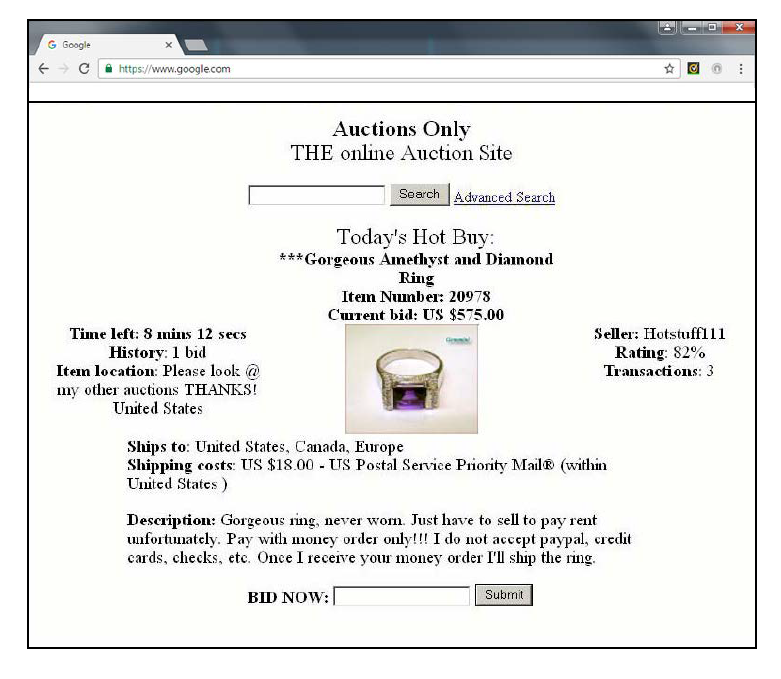
Students investigate the safety and security issues surrounding online shopping. They use a set of criteria to evaluate online shopping websites and practice determining whether an online offer or merchant site is safe, secure, and legitimate.
Students investigate the safety and security issues surrounding online shopping. They use a set of criteria to evaluate online shopping websites and practice determining whether an online offer or merchant site is safe, secure, and legitimate.
Students investigate the safety and security issues surrounding online shopping. They use a set of criteria to evaluate online shopping websites and practice determining whether an online offer or merchant site is safe, secure, and legitimate.
Students investigate the safety and security issues surrounding online shopping. They use a set of criteria to evaluate online shopping websites and practice determining whether an online offer or merchant site is safe, secure, and legitimate.
Students investigate the safety and security issues surrounding online shopping. They use a set of criteria to evaluate online shopping websites and practice determining whether an online offer or merchant site is safe, secure, and legitimate.
Students investigate the safety and security issues surrounding online shopping. They use a set of criteria to evaluate online shopping websites and practice determining whether an online offer or merchant site is safe, secure, and legitimate.
Students investigate the safety and security issues surrounding online shopping. They use a set of criteria to evaluate online shopping websites and practice determining whether an online offer or merchant site is safe, secure, and legitimate.
Students investigate the safety and security issues surrounding online shopping. They use a set of criteria to evaluate online shopping websites and practice determining whether an online offer or merchant site is safe, secure, and legitimate.
Students investigate the safety and security issues surrounding online shopping. They use a set of criteria to evaluate online shopping websites and practice determining whether an online offer or merchant site is safe, secure, and legitimate.
Students investigate the safety and security issues surrounding online shopping. They use a set of criteria to evaluate online shopping websites and practice determining whether an online offer or merchant site is safe, secure, and legitimate.