

Print

Student Handout 3 - Worksheet: Intellectual Property Vocabulary

image.png

1. If you write a song, it is protected by _______________________.

2. The songwriter will lose money if you ______________________ his song without paying for it.

3. It is illegal to take something from a ______________________without permission.

4. A music ______________________ is one who steals music online.



Unit - Grade 4: Intellectual Property

Students learn how to demonstrate ethical use of Intellectual Property. They examine the concepts of Intellectual Property (IP), plagiarism, and piracy through disussion and exercises.

Lesson - Vocabulary Review

Students review vocabulary terms associated with intellectual property. They learn that copyright laws protect material found online.

Student Handout 2 - Worksheet: Intellectual Property Match-Up

Students review vocabulary terms associated with intellectual property. They learn that copyright laws protect material found online.

Student Handout 3 - Worksheet: Intellectual Property Vocabulary

Students review vocabulary terms associated with intellectual property. They learn that copyright laws protect material found online.
Teacher Reference - Answer Key 2 & 3: Intellectual Property Match-Up

Students review vocabulary terms associated with intellectual property. They learn that copyright laws protect material found online.

Print

Student Handout 5 - Reference Page: Donny's Rules for Legal Downloading & Copying

image.png• It is legal (COOL!) to make a personal copy of a CD for yourself. Remember though - No one else can make a copy.
• You cannot download anything from the Internet just because you know how to do it.

• DO use Web sites that offer free sample music. Check all information carefully before downloading.

• DO use Web sites that offer legal music downloading for a fee - But ask your parents before you buy.


Unit - Grade 4: Intellectual Property

Students learn how to demonstrate ethical use of Intellectual Property. They examine the concepts of Intellectual Property (IP), plagiarism, and piracy through disussion and exercises.

Lesson - Introduction to Piracy

Students understand that digital media such as photos, images, videos, movies, music files and apps are forms of intellectual property. They learn that piracy means to illegally download, copy and distribute digital media; a form of theft.

Student Handout 4 - Reference Page: Lemonade Stand Skit

Students understand that digital media such as photos, images, videos, movies, music files and apps are forms of intellectual property. They learn that piracy means to illegally download, copy and distribute digital media; a form of theft.

Student Handout 5 - Reference Page: Donny's Rules for Legal Downloading & Copying

Students understand that digital media such as photos, images, videos, movies, music files and apps are forms of intellectual property. They learn that piracy means to illegally download, copy and distribute digital media; a form of theft.

Student Handout 6 - Worksheet: Defeating Piracy

Students understand that digital media such as photos, images, videos, movies, music files and apps are forms of intellectual property. They learn that piracy means to illegally download, copy and distribute digital media; a form of theft.

Teacher Reference Page - Answer Key 6: Defeating Piracy

Students understand that digital media such as photos, images, videos, movies, music files and apps are forms of intellectual property. They learn that piracy means to illegally download, copy and distribute digital media; a form of theft.

Print

Student Handout 6 - Worksheet: Defeating Piracy

image.pngPart 1

True or False?
1. Internet pirates steal from people who create music. True or false?
2. Donny broke the law when he made lots of CD copies for his friends. True or false?
3. If you make up a song and write it down, you are the creator. True or false?
4. Copyright laws protect the rights of a creator. True or false?
5. It is legal to buy a CD from a store. True or false?


Unit - Grade 4: Intellectual Property

Students learn how to demonstrate ethical use of Intellectual Property. They examine the concepts of Intellectual Property (IP), plagiarism, and piracy through disussion and exercises.

Lesson - Introduction to Piracy

Students understand that digital media such as photos, images, videos, movies, music files and apps are forms of intellectual property. They learn that piracy means to illegally download, copy and distribute digital media; a form of theft.

Student Handout 4 - Reference Page: Lemonade Stand Skit

Students understand that digital media such as photos, images, videos, movies, music files and apps are forms of intellectual property. They learn that piracy means to illegally download, copy and distribute digital media; a form of theft.

Student Handout 5 - Reference Page: Donny's Rules for Legal Downloading & Copying

Students understand that digital media such as photos, images, videos, movies, music files and apps are forms of intellectual property. They learn that piracy means to illegally download, copy and distribute digital media; a form of theft.

Student Handout 6 - Worksheet: Defeating Piracy

Students understand that digital media such as photos, images, videos, movies, music files and apps are forms of intellectual property. They learn that piracy means to illegally download, copy and distribute digital media; a form of theft.

Teacher Reference Page - Answer Key 6: Defeating Piracy

Students understand that digital media such as photos, images, videos, movies, music files and apps are forms of intellectual property. They learn that piracy means to illegally download, copy and distribute digital media; a form of theft.

Print

Student Handout 9 - Empowerment: Build a Bulletin Board About Intellectual Property

Empowerment Activity

Have students conduct an Internet Search for “road signs” or “traffic signs” to get street sign ideas, or use the
template examples provided.

Assign a road sign to each student or student group.

Students create a selection of signs that provide different messages about safe and legal downloading.

Assemble the signs on a bulletin board depicting the Internet Superhighway.

For example:


Unit - Grade 4: Intellectual Property

Students learn how to demonstrate ethical use of Intellectual Property. They examine the concepts of Intellectual Property (IP), plagiarism, and piracy through disussion and exercises.

Student Handout 9 - Empowerment: Build a Bulletin Board About Intellectual Property

Students learn how to demonstrate ethical use of Intellectual Property. They examine the concepts of Intellectual Property (IP), plagiarism, and piracy through disussion and exercises.

Student Handout 10 - Worksheet: Reinforcement Activity - Intellectual Property Crossword

Students learn how to demonstrate ethical use of Intellectual Property. They examine the concepts of Intellectual Property (IP), plagiarism, and piracy through disussion and exercises.

Student Handout 11 - Reference Page: Everybody's Doing It (Beat Street Theme Song) Lyrics

Students learn how to demonstrate ethical use of Intellectual Property. They examine the concepts of Intellectual Property (IP), plagiarism, and piracy through disussion and exercises.

Print

Student Handout 10 - Worksheet: Reinforcement Activity - Intellectual Property Crossword

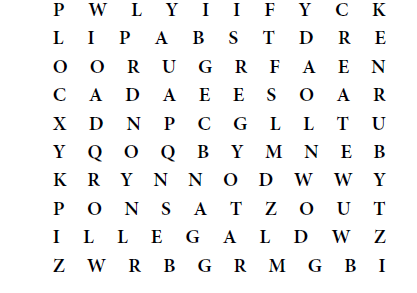
Word Search
BURN
COPY
CREATE
DONNY
DOWNLOAD
IBUDDY
ILLEGAL
LEGAL
PIRACY
PROPERTY

image.png


Unit - Grade 4: Intellectual Property

Students learn how to demonstrate ethical use of Intellectual Property. They examine the concepts of Intellectual Property (IP), plagiarism, and piracy through disussion and exercises.

Student Handout 9 - Empowerment: Build a Bulletin Board About Intellectual Property

Students learn how to demonstrate ethical use of Intellectual Property. They examine the concepts of Intellectual Property (IP), plagiarism, and piracy through disussion and exercises.

Student Handout 10 - Worksheet: Reinforcement Activity - Intellectual Property Crossword

Students learn how to demonstrate ethical use of Intellectual Property. They examine the concepts of Intellectual Property (IP), plagiarism, and piracy through disussion and exercises.

Student Handout 11 - Reference Page: Everybody's Doing It (Beat Street Theme Song) Lyrics

Students learn how to demonstrate ethical use of Intellectual Property. They examine the concepts of Intellectual Property (IP), plagiarism, and piracy through disussion and exercises.

Print

Student Handout 2 - Worksheet: Help Donny Act Responsibly!

Help Donny Act Responsibly!                                          image.png

Directions
Donny is having some trouble remembering all the rules of intellectual property. Help him make the responsible,
RIGHT decisions in each of these scenarios.


Unit - Grade 5: Intellectual Property

Students come to understand the value of intellectual property. They acquire and use domain-specific key terms, and practice ethical decision-making regarding music piracy, plagiarism, and copyright infrigement in a number of scenarios. Students learn how to identify copyright materials, cite their sources and demonstrate respect for others' creative rights. Students produce and publish a PSA. Multimedia resources and activities feature Donny the Downloader.

Lesson - Vocabulary Practice

Students review key terms related to intellectual property. They examine a series of secenarios involving piracy and plagiarism, practice ethical decision-making, and support their response with reasoning and examples.

Student Handout 2 - Worksheet: Help Donny Act Responsibly!

Students review key terms related to intellectual property. They examine a series of secenarios involving piracy and plagiarism, practice ethical decision-making, and support their response with reasoning and examples.

Student Handout 3 - Reference Page: Vocabulary: Putting it Together

Students review key terms related to intellectual property. They examine a series of secenarios involving piracy and plagiarism, practice ethical decision-making, and support their response with reasoning and examples.

Print

Student Handout 3 - Reference Page: Vocabulary: Putting it Together

What does it mean?
   • Creator: someone who makes something unique (that has not been made before)—the one who “creates”
   • Intellectual property: something that has been created in a person’s mind—like a song or story.
   • Copyright: laws that protect intellectual property made into something material like a book or song
     recording. The intellectual property must have form/shape to be copyright protected. Copyright


Unit - Grade 5: Intellectual Property

Students come to understand the value of intellectual property. They acquire and use domain-specific key terms, and practice ethical decision-making regarding music piracy, plagiarism, and copyright infrigement in a number of scenarios. Students learn how to identify copyright materials, cite their sources and demonstrate respect for others' creative rights. Students produce and publish a PSA. Multimedia resources and activities feature Donny the Downloader.

Lesson - Vocabulary Practice

Students review key terms related to intellectual property. They examine a series of secenarios involving piracy and plagiarism, practice ethical decision-making, and support their response with reasoning and examples.

Student Handout 2 - Worksheet: Help Donny Act Responsibly!

Students review key terms related to intellectual property. They examine a series of secenarios involving piracy and plagiarism, practice ethical decision-making, and support their response with reasoning and examples.

Student Handout 3 - Reference Page: Vocabulary: Putting it Together

Students review key terms related to intellectual property. They examine a series of secenarios involving piracy and plagiarism, practice ethical decision-making, and support their response with reasoning and examples.

Print

Student Handout 1 - Reference Page: Copyright & the Music Industry

Reference - Copyright & the Music Industry

The fact is that millions of people earn their livelihoods from the
creation and sale of music. These industry jobs range from the artist
singing the song, to the sound mixer in the studio, to the guy who
owns the local CD store. Each one has a stake in the business.


Unit - Learn IT B4U Burn IT

Students explore legal and ethical issues related to music piracy. They discover the economic impact of illegal downloads on the people who work in the entertainment and recording industry, and they determine the personal and legal consequences for unlawfully obtaining or distributing copyrighted music through the Internet. Upon completion of this unit, students create a Public Service Announcement that informs on the risks of piracy and legal alternatives to obtaining music online.

Lesson - Music Makers: Behind the Scenes Victims

Students examine the issue of intellectual property from various viewpoints through roleplay. They develop empathy for those that are impacted by digital piracy, consider the legalities and consequences, and propose solutions to the problem of digital piracy.

Student Handout 1 - Reference Page: Copyright & the Music Industry

Students examine the issue of intellectual property from various viewpoints through roleplay. They develop empathy for those that are impacted by digital piracy, consider the legalities and consequences, and propose solutions to the problem of digital piracy.

Student Handout 2 - Reference Page: Music-Maker Viewpoints

Students examine the issue of intellectual property from various viewpoints through roleplay. They develop empathy for those that are impacted by digital piracy, consider the legalities and consequences, and propose solutions to the problem of digital piracy.

Student Handout 3 - Worksheet: Music for Everyone

Students examine the issue of intellectual property from various viewpoints through roleplay. They develop empathy for those that are impacted by digital piracy, consider the legalities and consequences, and propose solutions to the problem of digital piracy.

Print

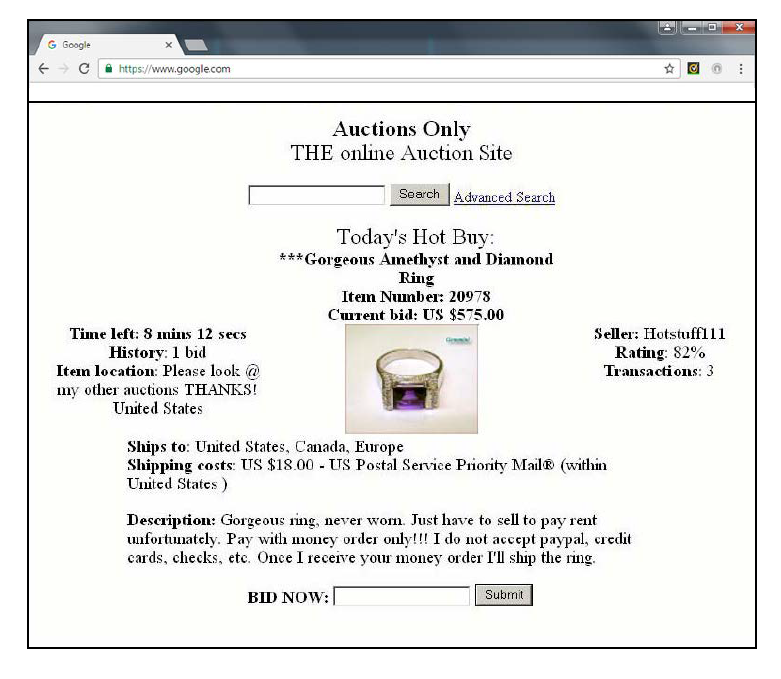
Student Handout 5 - Reference Page: Online Auction Website 2


image.png


Lesson - Online Shopping Risks

Students investigate safety and security issues involved with online shopping. They evaluate online shopping websites, and determine if the online listing is legitimate or a scam. Students design a Web page to educate others on safe and secure online shopping.

Student Handout 1 - Reference Page: Online Shopping

Students investigate safety and security issues involved with online shopping. They evaluate online shopping websites, and determine if the online listing is legitimate or a scam. Students design a Web page to educate others on safe and secure online shopping.

Student Handout 2 - Worksheet: Online Shopping Website Evaluation Tool

Students investigate safety and security issues involved with online shopping. They evaluate online shopping websites, and determine if the online listing is legitimate or a scam. Students design a Web page to educate others on safe and secure online shopping.

Student Handout 3 - Reference Page: Online Shopping Activity Guide

Students investigate safety and security issues involved with online shopping. They evaluate online shopping websites, and determine if the online listing is legitimate or a scam. Students design a Web page to educate others on safe and secure online shopping.

Student Handout 4 - Reference Page: Online Auction Website 1

Students investigate safety and security issues involved with online shopping. They evaluate online shopping websites, and determine if the online listing is legitimate or a scam. Students design a Web page to educate others on safe and secure online shopping.

Student Handout 5 - Reference Page: Online Auction Website 2

Students investigate safety and security issues involved with online shopping. They evaluate online shopping websites, and determine if the online listing is legitimate or a scam. Students design a Web page to educate others on safe and secure online shopping.

Student Handout 6 - Reference Page: Online Auction Website 3

Students investigate safety and security issues involved with online shopping. They evaluate online shopping websites, and determine if the online listing is legitimate or a scam. Students design a Web page to educate others on safe and secure online shopping.

Student Handout 7 - Empowerment: Website Design

Students investigate safety and security issues involved with online shopping. They evaluate online shopping websites, and determine if the online listing is legitimate or a scam. Students design a Web page to educate others on safe and secure online shopping.

Print

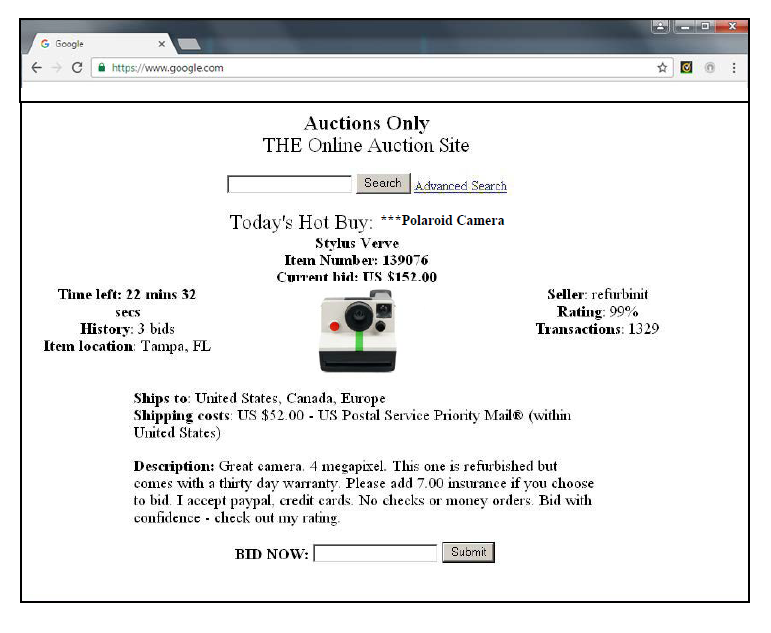
Student Handout 6 - Reference Page: Online Auction Website 3


image.png


Lesson - Online Shopping Risks

Students investigate safety and security issues involved with online shopping. They evaluate online shopping websites, and determine if the online listing is legitimate or a scam. Students design a Web page to educate others on safe and secure online shopping.

Student Handout 1 - Reference Page: Online Shopping

Students investigate safety and security issues involved with online shopping. They evaluate online shopping websites, and determine if the online listing is legitimate or a scam. Students design a Web page to educate others on safe and secure online shopping.

Student Handout 2 - Worksheet: Online Shopping Website Evaluation Tool

Students investigate safety and security issues involved with online shopping. They evaluate online shopping websites, and determine if the online listing is legitimate or a scam. Students design a Web page to educate others on safe and secure online shopping.

Student Handout 3 - Reference Page: Online Shopping Activity Guide

Students investigate safety and security issues involved with online shopping. They evaluate online shopping websites, and determine if the online listing is legitimate or a scam. Students design a Web page to educate others on safe and secure online shopping.

Student Handout 4 - Reference Page: Online Auction Website 1

Students investigate safety and security issues involved with online shopping. They evaluate online shopping websites, and determine if the online listing is legitimate or a scam. Students design a Web page to educate others on safe and secure online shopping.

Student Handout 5 - Reference Page: Online Auction Website 2

Students investigate safety and security issues involved with online shopping. They evaluate online shopping websites, and determine if the online listing is legitimate or a scam. Students design a Web page to educate others on safe and secure online shopping.

Student Handout 6 - Reference Page: Online Auction Website 3

Students investigate safety and security issues involved with online shopping. They evaluate online shopping websites, and determine if the online listing is legitimate or a scam. Students design a Web page to educate others on safe and secure online shopping.

Student Handout 7 - Empowerment: Website Design

Students investigate safety and security issues involved with online shopping. They evaluate online shopping websites, and determine if the online listing is legitimate or a scam. Students design a Web page to educate others on safe and secure online shopping.

Subscribe to Economics