Print

Student Handout 5 - Worksheet: Steps Toward Solutions

Build Empathy

Survivor stories illustrate what life is like for a teen caught up in modern day slavery. Consider Tiffany’s story.
She was 12 when she met her trafficker. Watch here: https://vimeo.com/151423373/d0ec60169a

Now that you have some background knowledge of human trafficking in relationship to teens, what do you
think life is like as a modern day slave? Write your response below. Identify other cases of trafficking in the
U.S., your state, and even your area.



Lesson - Student Initiative: Human Trafficking in the U.S.

Students come to understand that human trafficking affects students in their age group. Students discover that human trafficking does not only occur abroad; cases occur in urban, suburban and rural neighborhoods of the United States. They examine the role the Internet plays in the recruitment, grooming, and commercial exploitation of trafficking victims. Students research, define, and investigate the issue of human trafficking in their region, and prepare to take action through a student-driven empowerment project. A student workbook and teacher guide is included.

Teacher Reference Page 1 - Background: Human Trafficking, Youth, and the Internet

Students come to understand that human trafficking affects students in their age group. Students discover that human trafficking does not only occur abroad; cases occur in urban, suburban and rural neighborhoods of the United States. They examine the role the Internet plays in the recruitment, grooming, and commercial exploitation of trafficking victims. Students research, define, and investigate the issue of human trafficking in their region, and prepare to take action through a student-driven empowerment project. A student workbook and teacher guide is included.

Teacher Reference Page 2 - Answer Key: Quiz - "12: A Humanitarian Initiative"

Students come to understand that human trafficking affects students in their age group. Students discover that human trafficking does not only occur abroad; cases occur in urban, suburban and rural neighborhoods of the United States. They examine the role the Internet plays in the recruitment, grooming, and commercial exploitation of trafficking victims. Students research, define, and investigate the issue of human trafficking in their region, and prepare to take action through a student-driven empowerment project. A student workbook and teacher guide is included.

Student Handout 1 - Empowerment: iDrive Human Trafficking Initiative Workbook

Students come to understand that human trafficking affects students in their age group. Students discover that human trafficking does not only occur abroad; cases occur in urban, suburban and rural neighborhoods of the United States. They examine the role the Internet plays in the recruitment, grooming, and commercial exploitation of trafficking victims. Students research, define, and investigate the issue of human trafficking in their region, and prepare to take action through a student-driven empowerment project. A student workbook and teacher guide is included.

Student Handout 2 - Worksheet: iDrive Humanitarian Initiative Investigation Worksheet

Students come to understand that human trafficking affects students in their age group. Students discover that human trafficking does not only occur abroad; cases occur in urban, suburban and rural neighborhoods of the United States. They examine the role the Internet plays in the recruitment, grooming, and commercial exploitation of trafficking victims. Students research, define, and investigate the issue of human trafficking in their region, and prepare to take action through a student-driven empowerment project. A student workbook and teacher guide is included.
Student Handout 3 - Quiz: "12: A Humanitarian Initiative"

Students come to understand that human trafficking affects students in their age group. Students discover that human trafficking does not only occur abroad; cases occur in urban, suburban and rural neighborhoods of the United States. They examine the role the Internet plays in the recruitment, grooming, and commercial exploitation of trafficking victims. Students research, define, and investigate the issue of human trafficking in their region, and prepare to take action through a student-driven empowerment project. A student workbook and teacher guide is included.

Student Handout 4 - Reference Page: About Human Trafficking in the United States

Students come to understand that human trafficking affects students in their age group. Students discover that human trafficking does not only occur abroad; cases occur in urban, suburban and rural neighborhoods of the United States. They examine the role the Internet plays in the recruitment, grooming, and commercial exploitation of trafficking victims. Students research, define, and investigate the issue of human trafficking in their region, and prepare to take action through a student-driven empowerment project. A student workbook and teacher guide is included.
Student Handout 5 - Worksheet: Steps Toward Solutions

Students come to understand that human trafficking affects students in their age group. Students discover that human trafficking does not only occur abroad; cases occur in urban, suburban and rural neighborhoods of the United States. They examine the role the Internet plays in the recruitment, grooming, and commercial exploitation of trafficking victims. Students research, define, and investigate the issue of human trafficking in their region, and prepare to take action through a student-driven empowerment project. A student workbook and teacher guide is included.

Student Handout 6 - Empowerment: Agents Take Action

Students come to understand that human trafficking affects students in their age group. Students discover that human trafficking does not only occur abroad; cases occur in urban, suburban and rural neighborhoods of the United States. They examine the role the Internet plays in the recruitment, grooming, and commercial exploitation of trafficking victims. Students research, define, and investigate the issue of human trafficking in their region, and prepare to take action through a student-driven empowerment project. A student workbook and teacher guide is included.
Student Handout 7 - Empowerment: Reach Out: Human Trafficking Awareness Campaign

Students come to understand that human trafficking affects students in their age group. Students discover that human trafficking does not only occur abroad; cases occur in urban, suburban and rural neighborhoods of the United States. They examine the role the Internet plays in the recruitment, grooming, and commercial exploitation of trafficking victims. Students research, define, and investigate the issue of human trafficking in their region, and prepare to take action through a student-driven empowerment project. A student workbook and teacher guide is included.
Student Handout 8 - Empowerment: Speak Up - Community Outreach

Students come to understand that human trafficking affects students in their age group. Students discover that human trafficking does not only occur abroad; cases occur in urban, suburban and rural neighborhoods of the United States. They examine the role the Internet plays in the recruitment, grooming, and commercial exploitation of trafficking victims. Students research, define, and investigate the issue of human trafficking in their region, and prepare to take action through a student-driven empowerment project. A student workbook and teacher guide is included.

Student Handout 9 - Empowerment: Write it. Blog it.

Students come to understand that human trafficking affects students in their age group. Students discover that human trafficking does not only occur abroad; cases occur in urban, suburban and rural neighborhoods of the United States. They examine the role the Internet plays in the recruitment, grooming, and commercial exploitation of trafficking victims. Students research, define, and investigate the issue of human trafficking in their region, and prepare to take action through a student-driven empowerment project. A student workbook and teacher guide is included.
Student Handout 10 - Empowerment: Get Political: Letter to Congress

Students come to understand that human trafficking affects students in their age group. Students discover that human trafficking does not only occur abroad; cases occur in urban, suburban and rural neighborhoods of the United States. They examine the role the Internet plays in the recruitment, grooming, and commercial exploitation of trafficking victims. Students research, define, and investigate the issue of human trafficking in their region, and prepare to take action through a student-driven empowerment project. A student workbook and teacher guide is included.

Student Handout 11 - Empowerment: Short Form Documentary

Students come to understand that human trafficking affects students in their age group. Students discover that human trafficking does not only occur abroad; cases occur in urban, suburban and rural neighborhoods of the United States. They examine the role the Internet plays in the recruitment, grooming, and commercial exploitation of trafficking victims. Students research, define, and investigate the issue of human trafficking in their region, and prepare to take action through a student-driven empowerment project. A student workbook and teacher guide is included.

Student Handout 12 - Empowerment: Video PSA

Students come to understand that human trafficking affects students in their age group. Students discover that human trafficking does not only occur abroad; cases occur in urban, suburban and rural neighborhoods of the United States. They examine the role the Internet plays in the recruitment, grooming, and commercial exploitation of trafficking victims. Students research, define, and investigate the issue of human trafficking in their region, and prepare to take action through a student-driven empowerment project. A student workbook and teacher guide is included.
Student Handout 13 - Empowerment: Personal Release Form

Students come to understand that human trafficking affects students in their age group. Students discover that human trafficking does not only occur abroad; cases occur in urban, suburban and rural neighborhoods of the United States. They examine the role the Internet plays in the recruitment, grooming, and commercial exploitation of trafficking victims. Students research, define, and investigate the issue of human trafficking in their region, and prepare to take action through a student-driven empowerment project. A student workbook and teacher guide is included.

Print

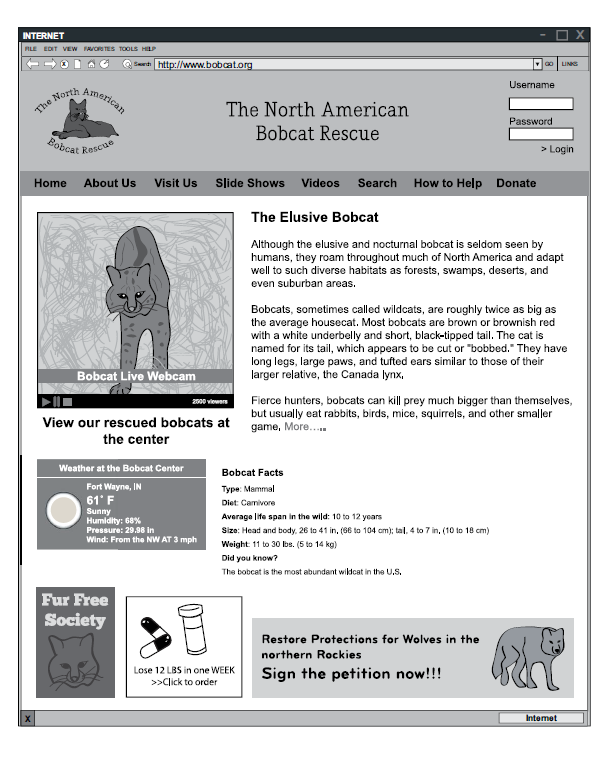
Student Handout 2 - Reference Page: Sample Website - The North American Bobcat Rescue

image.png


Lesson - Digital Literacy Connections: Webcams in Our World

Students develop digital literacy skills. They determine ways that organizations effectively use webcams to promote a cause by evaluating a series of websites. They learn that these sites may allow online ads to generate financial support, and develop guidelines for public websites to follow.

Student Handout 1 - Worksheet: Webcams in Our World

Students develop digital literacy skills. They determine ways that organizations effectively use webcams to promote a cause by evaluating a series of websites. They learn that these sites may allow online ads to generate financial support, and develop guidelines for public websites to follow.

Student Handout 2 - Reference Page: Sample Website - The North American Bobcat Rescue

Students develop digital literacy skills. They determine ways that organizations effectively use webcams to promote a cause by evaluating a series of websites. They learn that these sites may allow online ads to generate financial support, and develop guidelines for public websites to follow.

Print

Student Handout - Worksheet: What Are Wikis?

What are Wikis?image.png

Wikis are Web sites developed collaboratively by a community of users, allowing any user to add and edit content. Wikipedia is an example of an open encyclopedia.
However, not all wikis are encyclopedias. They can be used among a family to update family members about life events. They could be used by corporations for employees to post on topics and expertise.


Lesson - Wise Use of Wikis

Students learn about wikis, and they explore the beneficial uses of wikis in education. They use wiki technology to publish written work including links to online sources and digital media. Students plan, revise, edit, and incorporate peer feedback to produce quality written work based on an identified audience and purpose. Students adopt e-Safety and responsible use guidelines while engaged in this technology-based project.

Student Handout - Worksheet: What Are Wikis?

Students learn about wikis, and they explore the beneficial uses of wikis in education. They use wiki technology to publish written work including links to online sources and digital media. Students plan, revise, edit, and incorporate peer feedback to produce quality written work based on an identified audience and purpose. Students adopt e-Safety and responsible use guidelines while engaged in this technology-based project.

Print

Student Handout 1 - Worksheet: Copyright Symbol Coloring Page

Activity Page

Color the Copyright Symbol

image.png


Unit - Intellectual Property with Dot & i

This unit lays a foundation for digital ethics by introducing students to the concepts of intellectual property and ownership of creative material.Students learn how to ethically utilize creative material online and offline. They participate in the creative process and perform quick skits involving Dot & i for each step in the process.

Teacher Reference Page - Glossary of Terms

This unit lays a foundation for digital ethics by introducing students to the concepts of intellectual property and ownership of creative material.Students learn how to ethically utilize creative material online and offline. They participate in the creative process and perform quick skits involving Dot & i for each step in the process.

Student Handout 1 - Worksheet: Copyright Symbol Coloring Page

This unit lays a foundation for digital ethics by introducing students to the concepts of intellectual property and ownership of creative material.Students learn how to ethically utilize creative material online and offline. They participate in the creative process and perform quick skits involving Dot & i for each step in the process.

Student Handout 2 - Reference Page: Cite Your Sources

This unit lays a foundation for digital ethics by introducing students to the concepts of intellectual property and ownership of creative material.Students learn how to ethically utilize creative material online and offline. They participate in the creative process and perform quick skits involving Dot & i for each step in the process.

Print

Student Handout 4 - Worksheet: Dot & I Puppet Cut-Outs for Scene 1

image.pngimage.png

image.pngimage.png


Unit - Intellectual Property with Dot & i

This unit lays a foundation for digital ethics by introducing students to the concepts of intellectual property and ownership of creative material.Students learn how to ethically utilize creative material online and offline. They participate in the creative process and perform quick skits involving Dot & i for each step in the process.

Lesson - Scene 1: Use Your Brain

Students learn that the brain is responsible for different ways of thinking; logic and creativity. After following along with dialogue between the characters Dot & i, students participate in a collaborative discussion about inventions and the creative process.

Student Handout 3 - Reference Page: Dot & I Skit - Scene 1: Use Your Brain

Students learn that the brain is responsible for different ways of thinking; logic and creativity. After following along with dialogue between the characters Dot & i, students participate in a collaborative discussion about inventions and the creative process.

Student Handout 4 - Worksheet: Dot & I Puppet Cut-Outs for Scene 1

Students learn that the brain is responsible for different ways of thinking; logic and creativity. After following along with dialogue between the characters Dot & i, students participate in a collaborative discussion about inventions and the creative process.

Print

Student Handout 6 - Worksheet: Dot & I Puppet Cut-Outs for Scene 2

image.pngimage.png

image.pngimage.png


Unit - Intellectual Property with Dot & i

This unit lays a foundation for digital ethics by introducing students to the concepts of intellectual property and ownership of creative material.Students learn how to ethically utilize creative material online and offline. They participate in the creative process and perform quick skits involving Dot & i for each step in the process.

Lesson - Scene 2: Have an Idea

Students understand that an invention is often the result of creative problem solving. They learn that solutions start with a brainstorm. After following along with dialogue between the characters Dot & i, students examine inventions by kids. They practice identifying problems in brainstorming solutions.

Student Handout 5 - Reference Page: Dot & I Skit - Scene 2: Have an Idea

Students understand that an invention is often the result of creative problem solving. They learn that solutions start with a brainstorm. After following along with dialogue between the characters Dot & i, students examine inventions by kids. They practice identifying problems in brainstorming solutions.

Student Handout 6 - Worksheet: Dot & I Puppet Cut-Outs for Scene 2

Students understand that an invention is often the result of creative problem solving. They learn that solutions start with a brainstorm. After following along with dialogue between the characters Dot & i, students examine inventions by kids. They practice identifying problems in brainstorming solutions.

Print

Student Handout 8 - Worksheet: Dot & I Puppet Cut-Outs for Scene 3

image.pngimage.png

image.png


Unit - Intellectual Property with Dot & i

This unit lays a foundation for digital ethics by introducing students to the concepts of intellectual property and ownership of creative material.Students learn how to ethically utilize creative material online and offline. They participate in the creative process and perform quick skits involving Dot & i for each step in the process.

Lesson - Scene 3: Make Ideas Better

Students learn that evaluation is an important part of the creative process. They come to understand the value of feedback to improving upon an idea; also known as "innovation."

Student Handout 7 - Reference Page: Dot & I Skit - Scene 3: Make Ideas Better

Students learn that evaluation is an important part of the creative process. They come to understand the value of feedback to improving upon an idea; also known as "innovation."

Student Handout 8 - Worksheet: Dot & I Puppet Cut-Outs for Scene 3

Students learn that evaluation is an important part of the creative process. They come to understand the value of feedback to improving upon an idea; also known as "innovation."

Print

Student Handout 10 - Worksheet: Dot & I Puppet Cut-Outs for Scene 4

image.pngimage.png

image.pngimage.png


Unit - Intellectual Property with Dot & i

This unit lays a foundation for digital ethics by introducing students to the concepts of intellectual property and ownership of creative material.Students learn how to ethically utilize creative material online and offline. They participate in the creative process and perform quick skits involving Dot & i for each step in the process.

Lesson - Scene 4: Invention

Students follow along with dialogue between characters Dot & i, and they learn that an inventor's log helps a person keep track of their ideas and provides proof that they are the original owner of a project.

Student Handout 9 - Reference Page: Dot & I Skit - Scene 4: Invention

Students follow along with dialogue between characters Dot & i, and they learn that an inventor's log helps a person keep track of their ideas and provides proof that they are the original owner of a project.

Student Handout 10 - Worksheet: Dot & I Puppet Cut-Outs for Scene 4

Students follow along with dialogue between characters Dot & i, and they learn that an inventor's log helps a person keep track of their ideas and provides proof that they are the original owner of a project.

Print

Student Handout 12 - Worksheet: Dot & I Puppet Cut-Outs for Scene 5

image.pngimage.png


Unit - Intellectual Property with Dot & i

This unit lays a foundation for digital ethics by introducing students to the concepts of intellectual property and ownership of creative material.Students learn how to ethically utilize creative material online and offline. They participate in the creative process and perform quick skits involving Dot & i for each step in the process.

Lesson - Scene 5: Name Your Invention

Students understand that inventions have a name. After following along with dialogue between Dot & i, they explore different ways to come up with names for their inventions. Students learn that an invention, and its name, are forms of intellectual property.

Student Handout 11 - Reference Page: Dot & I Skit - Scene 5: Name Your Invention

Students understand that inventions have a name. After following along with dialogue between Dot & i, they explore different ways to come up with names for their inventions. Students learn that an invention, and its name, are forms of intellectual property.

Student Handout 12 - Worksheet: Dot & I Puppet Cut-Outs for Scene 5

Students understand that inventions have a name. After following along with dialogue between Dot & i, they explore different ways to come up with names for their inventions. Students learn that an invention, and its name, are forms of intellectual property.

Print

Student Handout 14 - Worksheet: Dot & I Puppet Cut-Outs for Scene 6

image.pngimage.png


Unit - Intellectual Property with Dot & i

This unit lays a foundation for digital ethics by introducing students to the concepts of intellectual property and ownership of creative material.Students learn how to ethically utilize creative material online and offline. They participate in the creative process and perform quick skits involving Dot & i for each step in the process.

Lesson - Scene 6: Protect Your Invention

Students learn that inventions are forms of intellectual property. They come to undestand that, just as with physical property, intellectual property has value. By following along with dialogue between characters Dot & i, students come to understand that scammers try to trick inventors into giving away their intellectual property rights.

Student Handout 13 - Reference Page: Dot & I Skit - Scene 6: Protect Your Invention

Students learn that inventions are forms of intellectual property. They come to undestand that, just as with physical property, intellectual property has value. By following along with dialogue between characters Dot & i, students come to understand that scammers try to trick inventors into giving away their intellectual property rights.

Student Handout 14 - Worksheet: Dot & I Puppet Cut-Outs for Scene 6

Students learn that inventions are forms of intellectual property. They come to undestand that, just as with physical property, intellectual property has value. By following along with dialogue between characters Dot & i, students come to understand that scammers try to trick inventors into giving away their intellectual property rights.

Subscribe to Economics