

Print

Student Handout 2 - Empowerment: Personal Release Form-Mobile Devices

I, _______________________________________________________ (Print Name), do hereby grant ISAFE, including (without limitation) its principals, employees, agents, affiliates, contractors, successors and assigns, permission to use my likeness, voice, picture, name, and/or intellectual property (“content”) for print, radio, webcast, film, television or Internet broadcast anywhere throughout the United States and the world, and to edit such material on film or videotape or other media formats.



Lesson Plan - Cyber Bullying and Mobile Devices

Students uncover the role that mobile phones play in cyber bullying situations. They devise to prevent themselves from becoming a victim, and from perpetuating the cycle. iDrive Empowerment Activities include roleplay, school policy improvement and/or community outreach presentation.

Print

Teacher Reference Page - iDrive Teacher Toolkit-Mobile Devices

Description

Click on the resource below to view in fullscreen.


Print

Student Handout - Reference Page: COPPA-Interactive Web

What is COPPA?
  • COPPA stands for the “Children’s Online Privacy Protection Act”
  • COPPA is a U.S.


Lesson - Safety for the Interactive Web

Students come to understand the need to make responsible choices in order to ensure personal safety when using the Internet. Students learn more about Web 2.0 and corresponding safety tips. They incorporate images and text in the creation of a safety tip sheet.

Reference Page - COPPA: Protecting a Child's Right to Privacy-Interactive Web

Students relate online privacy to personal safety in a class discussion about age-appropriate sites and apps. Through exploration of online registration forms and profiles, students discover the importance of following age requirements (COPPA) and protecting online identity. Students create a mock-up of a safe and secure online profile as part of their Empowerment Project: the designe of a virtual world called Sock Puppet Nation.

Print

Reference Page - COPPA: Protecting a Child's Right to Privacy-Interactive Web

Description

COPPA LAWS: Protecting a Child’s Right to Privacy

The Children’s Online Privacy Protection Act is a set of laws, passed in 1998, that protects the online privacy of persons under the age of 13. Online service providers must notify parents and gain consent before collecting personal identifying information (e.g. name, birthdate, age, gender) from children. Additional identifying information includes geolocation data (GPS); images, videos, and audio files of the child’s voice; Web browser cookies; a mobile device identifier (IMEI number); and the IP address of a computer or device.


Lesson - Safety for the Interactive Web

Lesson - Safety for the Interactive Web

Students come to understand the need to make responsible choices in order to ensure personal safety when using the Internet. Students learn more about Web 2.0 and corresponding safety tips. They incorporate images and text in the creation of a safety tip sheet.

Student Handout - Reference Page: COPPA-Interactive Web

Student Handout - Reference Page: COPPA-Interactive Web

Students recognize the importance of protecting online identity by engaging in class discussion. They list types of information that reveal personal identity; explain the purpose of protecting online identity; discuss the risks of revealing personally identifiable information; evaluate online profiles and behaviors for security and identity protection, and create a sketch of an online registration form and user profile for people under age 13.

Print

Student Handout - Reference Page: COPPA-Twitter

What is COPPA?
  • COPPA stands for the “Children’s Online Privacy Protection Act”
  • COPPA is a U.S.


Reference Page - COPPA: Protecting a Child's Right to Privacy-Twitter

Students relate online privacy to personal safety in a class discussion about age-appropriate sites and apps. Through exploration of online registration forms and profiles, students discover the importance of following age requirements (COPPA) and protecting online identity. Students create a mock-up of a safe and secure online profile as part of their Empowerment Project: the designe of a virtual world called Sock Puppet Nation.

Unit - Safe Social Networking: X (Formally Twitter) for the K-8 Classroom

When used as an integral part of the classroom protocol and routine, Twitter can offer unique and meaningful learning opportunities that model responsible use of social media and improved communication between teacher, parents and students. Classroom integration activities are included.

Lesson Plan – Introduction to X: First Class Post

When used as an integral part of the classroom protocol and routine, Twitter can offer unique and meaningful learning opportunities that model responsible use of social media and improved communication between teacher, parents and students. Classroom integration activities are included.

Print

Reference Page - COPPA: Protecting a Child's Right to Privacy-Twitter

Description

COPPA LAWS: Protecting a Child’s Right to Privacy

The Children’s Online Privacy Protection Act is a set of laws, passed in 1998, that protects the online privacy of persons under the age of 13. Online service providers must notify parents and gain consent before collecting personal identifying information (e.g. name, birthdate, age, gender) from children. Additional identifying information includes geolocation data (GPS); images, videos, and audio files of the child’s voice; Web browser cookies; a mobile device identifier (IMEI number); and the IP address of a computer or device.


Student Handout - Reference Page: COPPA-Twitter

Student Handout - Reference Page: COPPA-Twitter

Students recognize the importance of protecting online identity by engaging in class discussion. They list types of information that reveal personal identity; explain the purpose of protecting online identity; discuss the risks of revealing personally identifiable information; evaluate online profiles and behaviors for security and identity protection, and create a sketch of an online registration form and user profile for people under age 13.

Lesson Plan – Introduction to X: First Class Post

Lesson Plan – Introduction to X: First Class Post

When used as an integral part of the classroom protocol and routine, Twitter can offer unique and meaningful learning opportunities that model responsible use of social media and improved communication between teacher, parents and students. Classroom integration activities are included.

Unit - Safe Social Networking: X (Formally Twitter) for the K-8 Classroom

Unit - Safe Social Networking: X (Formally Twitter) for the K-8 Classroom

When used as an integral part of the classroom protocol and routine, Twitter can offer unique and meaningful learning opportunities that model responsible use of social media and improved communication between teacher, parents and students. Classroom integration activities are included.

Print

Student Handout 4 - Empowerment: iDrive Student Advisory Board Flyer


Teacher Reference Page - Empowerment Project: iDrive Toolkit

Prepare students to make a positive influence on the world with iDrive. iDrive is the Youth Outreach and Empowerment program of i-SAFE. Student-driven projects promote digital citizenship by empowering students to purposefully engage online and to deeply contribute to their communities.

Student Handout 3 - Empowerment Project: iDrive Toolkit

Prepare students to make a positive influence on the world with iDrive. iDrive is the Youth Outreach and Empowerment program of i-SAFE. Student-driven projects promote digital citizenship by empowering students to purposefully engage online and to deeply contribute to their communities.

Print

Lesson Plan - Teaching with Instagram

Description

Lesson Overview

Instagram is a powerful medium for storytelling.


Unit - Instagram Guide for Education

Unit - Instagram Guide for Education

This teacher’s toolkit delivers best practices and ideas to mindfully integrate Instagram across the curriculum. The guide can be used in the classroom, by ASB Advisors and school staff members who aim to improve communications in the education setting and prepare students for iDrive Outreach and Empowerment. Students practice responsible use while building a positive online presence in a media-rich learning environment. Includes a media release form.

Reference Page - COPPA: Protecting a Child's Right to Privacy

Reference Page - COPPA: Protecting a Child's Right to Privacy

Students relate online privacy to personal safety in a class discussion about age-appropriate sites and apps. Through exploration of online registration forms and profiles, students discover the importance of following age requirements (COPPA) and protecting online identity. Students create a mock-up of a safe and secure online profile as part of their Empowerment Project: the designe of a virtual world called Sock Puppet Nation.

Teacher Reference Page 1 - Instagram in Education

Teacher Reference Page 1 - Instagram in Education

This teacher’s toolkit delivers best practices and ideas to mindfully integrate Instagram across the curriculum. The guide can be used in the classroom, by ASB Advisors and school staff members who aim to improve communications in the education setting and prepare students for iDrive Outreach and Empowerment. Students practice responsible use while building a positive online presence in a media-rich learning environment. Includes a media release form.

Teacher Reference Page 2 - Before You Begin

Teacher Reference Page 2 - Before You Begin

This teacher’s toolkit delivers best practices and ideas to mindfully integrate Instagram across the curriculum. The guide can be used in the classroom, by ASB Advisors and school staff members who aim to improve communications in the education setting and prepare students for iDrive Outreach and Empowerment. Students practice responsible use while building a positive online presence in a media-rich learning environment. Includes a media release form.

Teacher Reference Page 3 - Guidelines and Expectations

Teacher Reference Page 3 - Guidelines and Expectations

This teacher’s toolkit delivers best practices and ideas to mindfully integrate Instagram across the curriculum. The guide can be used in the classroom, by ASB Advisors and school staff members who aim to improve communications in the education setting and prepare students for iDrive Outreach and Empowerment. Students practice responsible use while building a positive online presence in a media-rich learning environment. Includes a media release form.

Teacher Reference Page 4 - Getting Started

Teacher Reference Page 4 - Getting Started

This teacher’s toolkit delivers best practices and ideas to mindfully integrate Instagram across the curriculum. The guide can be used in the classroom, by ASB Advisors and school staff members who aim to improve communications in the education setting and prepare students for iDrive Outreach and Empowerment. Students practice responsible use while building a positive online presence in a media-rich learning environment. Includes a media release form.

Teacher Reference Page 5 - Teaching with Instagram

Teacher Reference Page 5 - Teaching with Instagram

This teacher’s toolkit delivers best practices and ideas to mindfully integrate Instagram across the curriculum. The guide can be used in the classroom, by ASB Advisors and school staff members who aim to improve communications in the education setting and prepare students for iDrive Outreach and Empowerment. Students practice responsible use while building a positive online presence in a media-rich learning environment. Includes a media release form.

Teacher Reference Page 6 - Social Media Account Request Form

Teacher Reference Page 6 - Social Media Account Request Form

This teacher’s toolkit delivers best practices and ideas to mindfully integrate Instagram across the curriculum. The guide can be used in the classroom, by ASB Advisors and school staff members who aim to improve communications in the education setting and prepare students for iDrive Outreach and Empowerment. Students practice responsible use while building a positive online presence in a media-rich learning environment. Includes a media release form.

Student Handout 1 - Worksheet: Instagram Photos

Student Handout 1 - Worksheet: Instagram Photos

This teacher’s toolkit delivers best practices and ideas to mindfully integrate Instagram across the curriculum. The guide can be used in the classroom, by ASB Advisors and school staff members who aim to improve communications in the education setting and prepare students for iDrive Outreach and Empowerment. Students practice responsible use while building a positive online presence in a media-rich learning environment. Includes a media release form.

Student Handout 2 - Empowerment: iDrive Empowerment Program

Student Handout 2 - Empowerment: iDrive Empowerment Program

This teacher’s toolkit delivers best practices and ideas to mindfully integrate Instagram across the curriculum. The guide can be used in the classroom, by ASB Advisors and school staff members who aim to improve communications in the education setting and prepare students for iDrive Outreach and Empowerment. Students practice responsible use while building a positive online presence in a media-rich learning environment. Includes a media release form.

Student Handout 2 - Empowerment: Personal Release Form

Student Handout 2 - Empowerment: Personal Release Form

Download and complete this Personal Release Form for all media-based projects depicting personal likeness of individuals. Submit completed forms when sharing multimedia content with i-SAFE for educational purposes.

Print

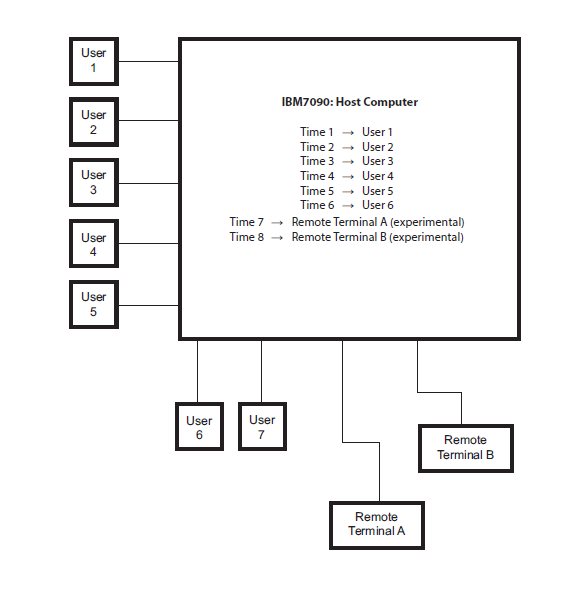
Teacher Reference Page 4 - Figure 1.0: Time Sharing Diagram

Description

image.png


(adapted from the description of Prof. Fernando Corbato, MIT c. 1963)


Unit - Welcome to World 2.0 Series: Origins of the Net

Unit - Welcome to World 2.0 Series: Origins of the Net

Students discover that the Internet originates in computer science and relates to military developments. They come to understand the how computers and networks evolved from serving government and commercial purposes to systems aiding billions of people. They examine the technological innovations of the Big Iron Era of the 1950s and 1960s and identify the challenges that led to the development of more user-friendly machines and networks. Students develop inquiry questions, conduct research, organize information and present their findings on a period of time in Internet history.

Lesson Plan - Timesharing: Mainframes Support Multiple Users

Lesson Plan - Timesharing: Mainframes Support Multiple Users

Students explore the concept of the mainframe computer. They determine the critical role that the 1960s mainframe computer plays in Internet history by comparing mainframes of the past with modern mainframe computers.

Teacher Reference Page 3 - Batch Processing and Timesharing

Teacher Reference Page 3 - Batch Processing and Timesharing

Students explore the concept of the mainframe computer. They determine the critical role that the 1960s mainframe computer plays in Internet history by comparing mainframes of the past with modern mainframe computers.

Teacher Reference Page 4 - Figure 1.0: Time Sharing Diagram

Teacher Reference Page 4 - Figure 1.0: Time Sharing Diagram

Students explore the concept of the mainframe computer. They determine the critical role that the 1960s mainframe computer plays in Internet history by comparing mainframes of the past with modern mainframe computers.

Print

Student Handout 3 - Empowerment Project: iDrive Toolkit

Click on the resource below to view in full screen.


Teacher Reference Page - Empowerment Project: iDrive Toolkit

Prepare students to make a positive influence on the world with iDrive. iDrive is the Youth Outreach and Empowerment program of i-SAFE. Student-driven projects promote digital citizenship by empowering students to purposefully engage online and to deeply contribute to their communities.

Student Handout 4 - Empowerment: iDrive Student Advisory Board Flyer

Prepare students to make a positive influence on the world with iDrive. iDrive is the Youth Outreach and Empowerment program of i-SAFE. Student-driven projects promote digital citizenship by empowering students to purposefully engage online and to deeply contribute to their communities.

Subscribe to Career & Technical Education